Supporting Child Mental Health During Hurricane Season
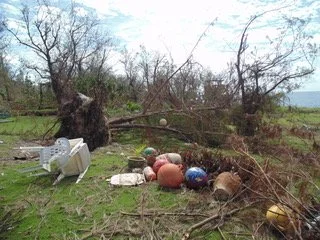
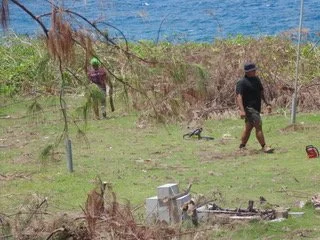
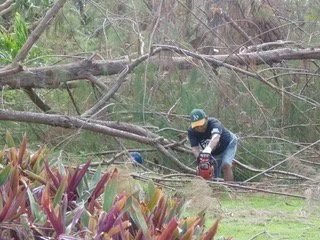
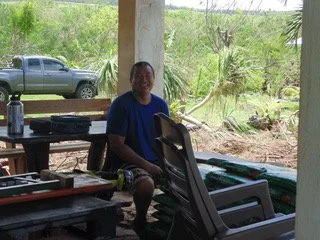
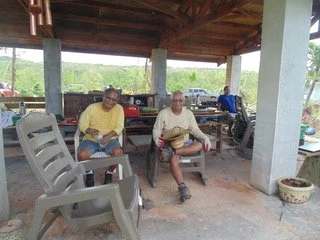
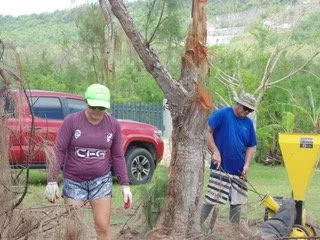
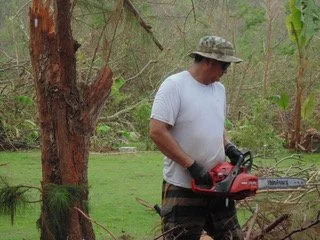
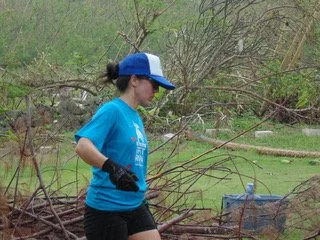
I grew up in Typhoon Alley on the island of Guahan, the U.S. Territory of Guam, where earthquakes and violent storms were routine. As a child, I could sleep through booming thunder, pounding rain, and even the nights when typhoon-force winds knocked our hot water heater across the roof above me. Those early years taught me what it meant to live without water or electricity for days, weeks, or even months.
Like many Pacific Islanders, I learned to read the signs of an approaching storm: heavy, silent air without seabirds; a faint charge on my skin; and a sudden sleepiness that made curling up with my dolls feel comforting. Before Typhoon Russ struck in 1990 — the island’s worst storm since the 1970s — my mother gave me a stuffed bear in a clown costume. My strongest memory of the storm is admiring my bear’s little hat glowing in the candlelight, not fear or the sound of rain hammering the tin shutters. I stayed calm through more than a dozen childhood typhoons because my parents — a social worker and an Army Colonel — created safety through preparation and routine.

Drawing on those experiences and my clinical training, here are three practical ways to help children manage storm anxiety this hurricane season:
Secure your essentials. Many thorough storm prep guides exist, such as those created by Imagine Water Works. My parents kept storm supplies — radios, batteries, and flashlights — in one place and ensured we knew what we had and why. We stored water in large trash cans for essentials like flushing toilets and brushing teeth. My parents filled the car’s gas tank and stocked non-perishable food. My father hung shutters and put tape on the windows in case they shattered. These predictable routines gave me confidence that we were ready to shelter in place and gave me a steady, grounded sense of safety.
Give children meaningful ways to help. Kids feel more secure when they have a role, and age-appropriate tasks give a sense of agency. There are many small ways children and youth can be engaged —for example, helping take out the trash or simply collecting trash from smaller bins; gathering laundry; sorting by color; folding; and delivering items to their respective rooms. The household can work together to see if there are items outside that need to be brought in, collected, or thrown away. Through these tasks, children learn that they have a role in supporting the family and being stewards of their home; it also gives caregivers a chance to provide positive reinforcement and encouragement for helping behaviors. These practices illustrate the Chamorro concept of inafa’maolek, which in my native language and culture represents everyone’s ability to do good and support harmony through cooperation.
Plan for unplugged family time. The electricity always went out when a storm hit, and often stayed off for days, sometimes even weeks or months after. That meant my brothers couldn’t use their SEGA consoles, I couldn’t pop in a VHS tape, and it was too dark for anyone to comfortably read a book. However, it became the norm to expect that our family would gather for an activity after dinner. Card games were an easy favorite. I started with “Go Fish,” then UNO, and eventually moved up to more challenging games. We played board games such as Hi Ho! Cherry-O, Scrabble, Trivial Pursuit, and my least favorite, Monopoly. We also had domino and Jenga sets. Playing these games didn’t just combat boredom; they provided a safe outlet to ease stress, strengthen bonds, and find joy despite uncertainty.
All children are different and may react differently to disruptions caused by weather events. Depending on their age, developmental stage, and personality, some may need extra cuddles, comfort items, and reassurance. Despite these variations, it is important to remember that children take cues from the adults around them, even when we think they aren’t paying attention. In these circumstances, it is key for caregivers to stay calm, remain mindful of what children overhear, and be attentive to their own stress. When caregivers regulate themselves, they create the security children rely on, before, during, and after the storm.