Film Learning Experience (FLEx) Study
UPDATE AS OF JUNE 26, 2026
❗️
UPDATE AS OF JUNE 26, 2026 ❗️
On June 26, 2026, the U.S. Department of Health and Human Services' Office of Population Affairs abruptly terminated almost all Teen Pregnancy Prevention Program (TPPP) grants that were currently active in the middle of what was meant to be a five-year project period. These cuts impacted organizations across more than two dozen states and eliminated around $67 million in federally funded research and programming, including our FLEx Study, which was solely funded by the TPPP grant program. Since the cuts were "effective immediately," this devastating loss has led to an immediate cessation of all study activities, which has forced us to reduce our staff and no longer be able to provide the program or the incentives that were promised to our youth participants at enrollment. For context, at the time of termination, we had 273 youth enrolled that will no longer be able to receive the information, resources, and incentives that the program was meant to provide.
These cuts, while devastating to IWES, directly harm the youth that our organization is committed to serving, and we are currently exploring other avenues to provide the content featured in FLEx. If you are interested in supporting FLEx, please reach out to our Director of Research & Evaluation, Ayesha Umrigar (aumrigar@iwesnola.org).
To learn more about the TPPP grant termination and the actions that are currently being taken to prevent it, follow this link.
Prior to funding cuts, the Film Learning Experience (FLEx) study was supported by the Office of Population Affairs’ (OPA) Teen Pregnancy Prevention (TPP) program and conducted in partnership with The Policy & Research Group (PRG) as our external evaluators. In an effort to address the disparities we see in unintended teen pregnancy and STIs among adolescents, OPA funded TPP programs with new or improved approaches that were responsive to the needs of youth, their families, and communities. In this regard, the FLEx study aimed to evaluate the impact of an adolescent health program IWES recently developed in order to gather evidence to show whether or not it was effective, and to ultimately share our findings. This intervention joined a portfolio of adolescent health programming at IWES that created safe spaces for youth to learn medically accurate information about their bodies and deepen their understanding of the relationship between their thoughts, feelings, decision-making, and actions.

The Backstory: EE and JJIIN
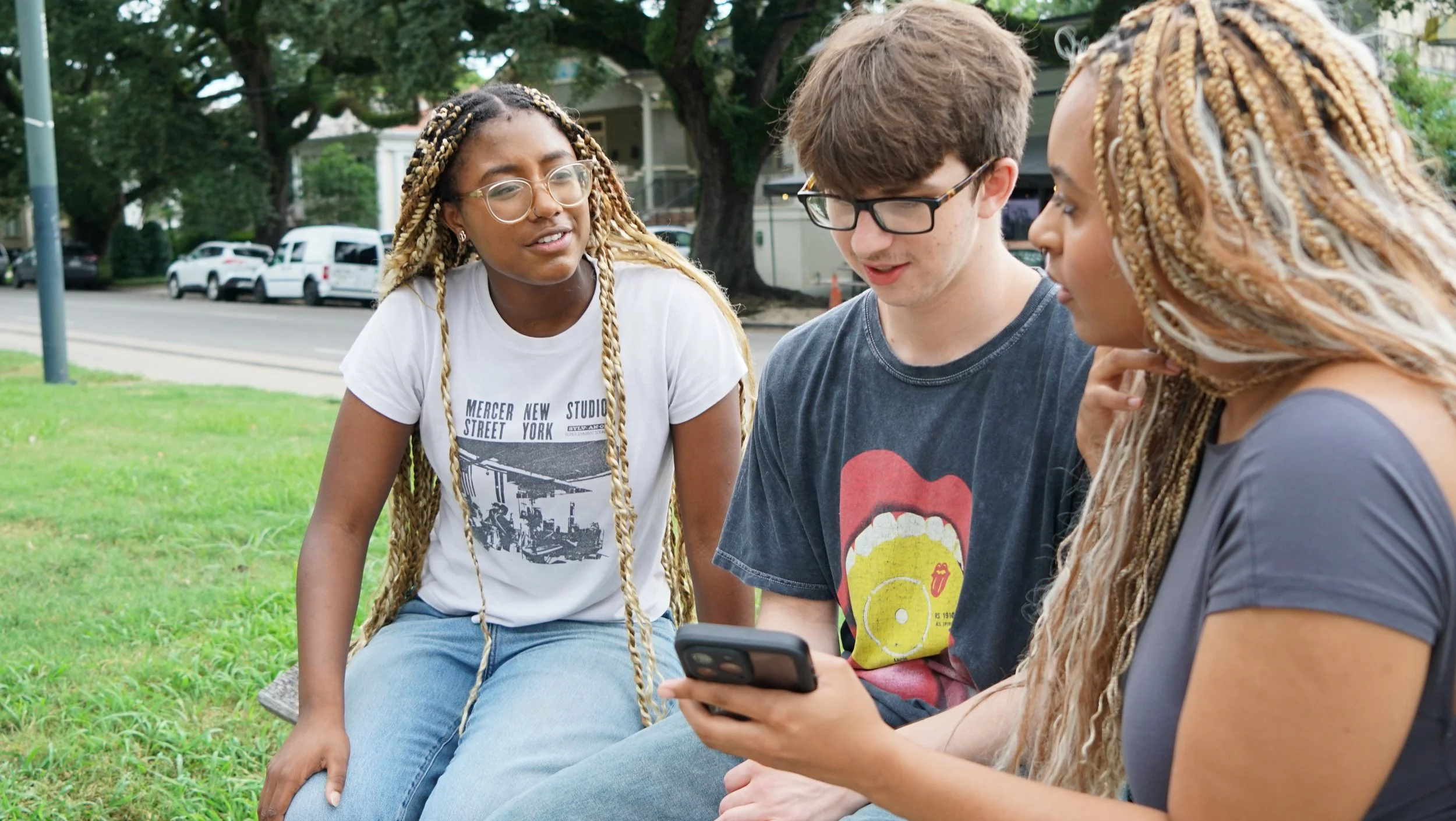
Entertainment Education (EE), or edutainment, is a method of learning from things we enjoy – more specifically, it’s the placement of educational content into entertainment programs to improve knowledge, attitudes, and behaviors around health or social issues. With support from PRG through their Juvenile Justice Innovation and Impact Network (JJIIN), in 2022-2023 we designed, refined, and piloted a media-based EE pregnancy prevention intervention that features an IWES original film. This intervention was designed specifically for and with youth who are involved (or at risk of involvement) with the juvenile legal and/or child welfare system. The program was reviewed by multiple stakeholders and industry experts, who deemed it to be medically accurate, trauma-informed, and well designed to promote healthy behaviors.
The Study: FLEx
This pilot was so successful that IWES was awarded a five-year grant in continued partnership with PRG to evaluate the effectiveness of our program. After months of research and evaluation design with PRG, we launched the FLEx study, with the goal of enrolling 1,850 youth from September 2024 to January 2027. Throughout the study, youth participated in a series of surveys to gauge their knowledge and experiences around sexual and reproductive health, relationships with peers and trusted adults, social-emotional wellness, and overall well-being. As a longitudinal study, FLEx participants completed follow-up surveys four months and ten months after enrollment, with special attention given to how young people's experiences may have changed.
As a novel program in this field, FLEx featured positive youth development programming that was:

In a single session participants viewed short film chapters paired with reflection and activities.

Relatable characters and storylines modeled healthy (and critiqued unhealthy) behaviors.

Participants learned to connect characters’ experiences to their own actions.

Program content was delivered in-person and virtually. In many cases, participants were able to choose the implementation format that worked best for them.
We are greatly appreciative of all the community partners and participants who were a part of this study. Although the FLEx Study’s abrupt ending was not the outcome we desired or predicted, we hope to continue this important work in other ways. Please contact Ayesha Umrigar (aumrigar@iwesnola.org) if you would like to discuss partnership opportunities.
